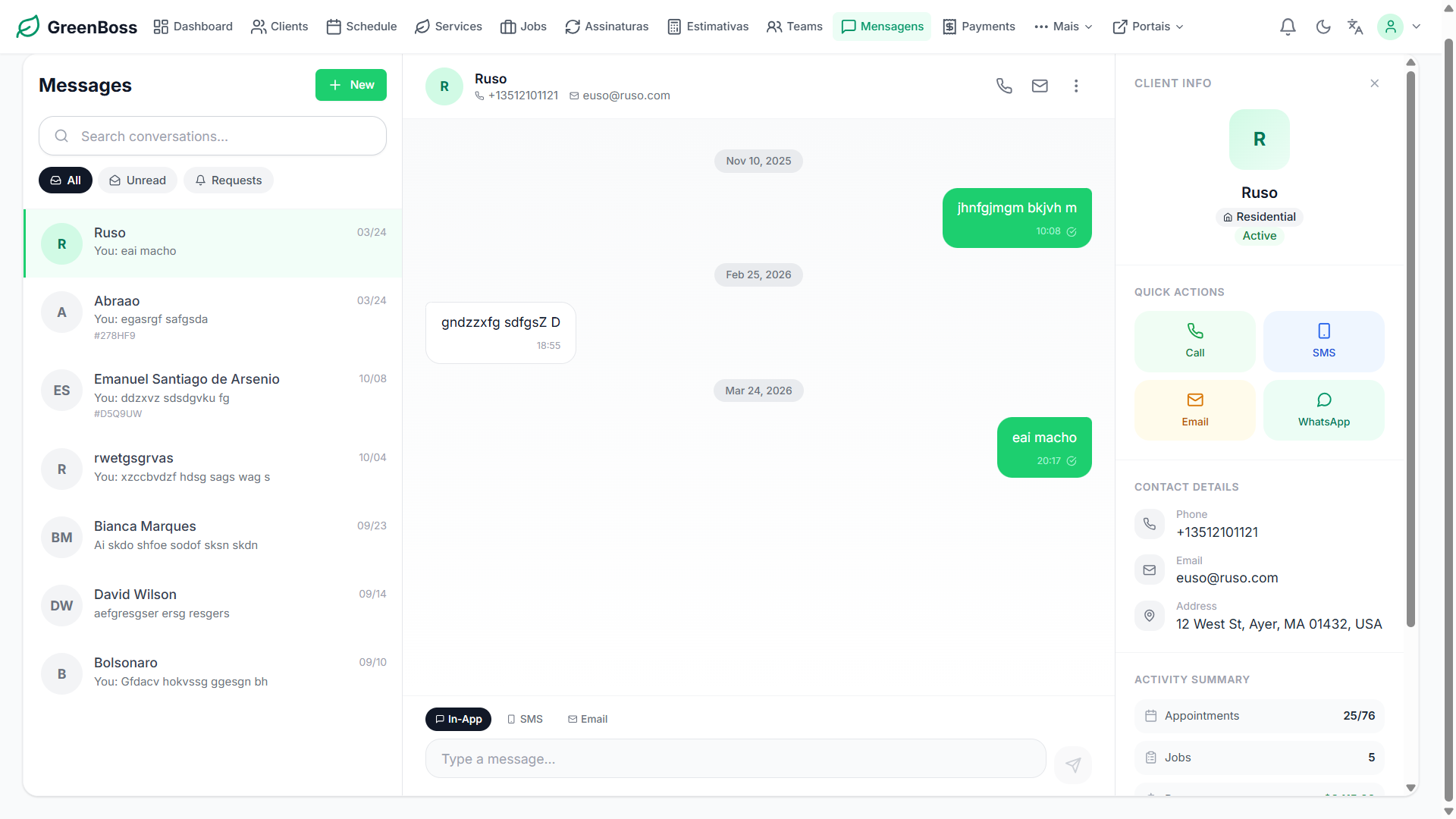
Most communication breakdowns in field service do not come from a lack of effort. They come from information living in too many places.
When job notes are split across texts, calls, inboxes, and personal chat apps, nobody has the full picture at the moment they need it.
Put communication in the context of the job
Messages become more useful when they live next to the job, client, and service history.
That gives your team one place to see:
- What the client requested
- What the office promised
- What the crew reported from the field
- What follow-up still needs to happen
Separate personal chat from operational records
Personal messaging apps are fast, but they are weak as a source of record.
For operational communication, you need something searchable, shared, and tied to the account or job. Otherwise:
- Clients repeat themselves
- Team members miss updates
- Managers spend time reconstructing context
Automate routine communication
The most common updates should not depend on someone remembering to send them manually.
Automate things like:
- Booking confirmations
- Arrival notices
- Job completion updates
- Payment reminders
That keeps communication consistent while freeing the team to handle exceptions well.
Build trust through visibility
Clients feel calmer when they know what is happening. Crews work better when they are not surprised. A centralized communication system improves both sides at once.